With the garden put to bed for winter, it is a good time to look back
at what it has given us. These photos come from several summers of
harvests, from overflowing trays of squash and peppers to a few favorite
close-ups taken right in the beds.
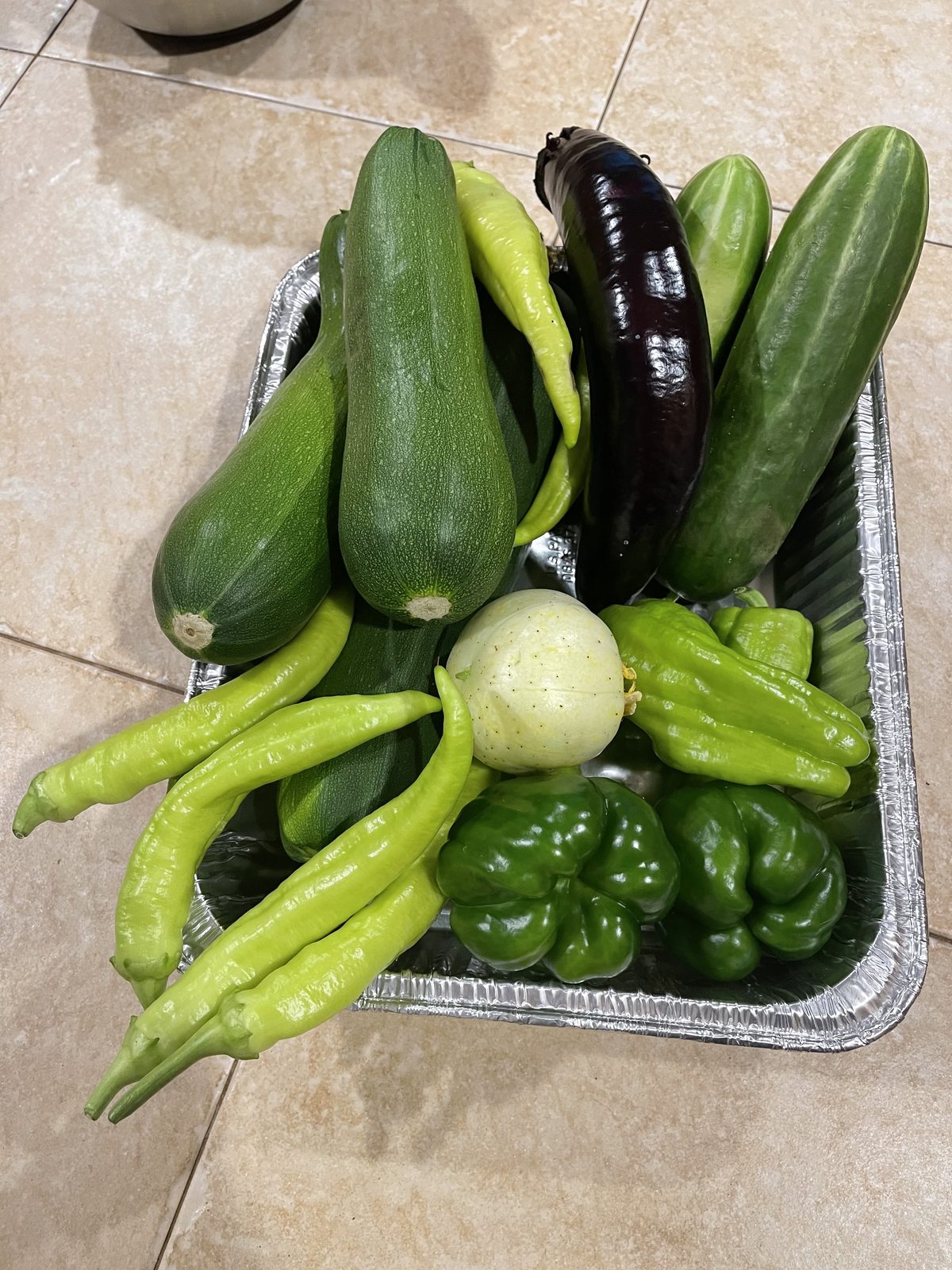
A July harvest: zucchini, cucumbers, a long Asian eggplant,
bell peppers, a pile of long yellow-green peppers, and a round lemon
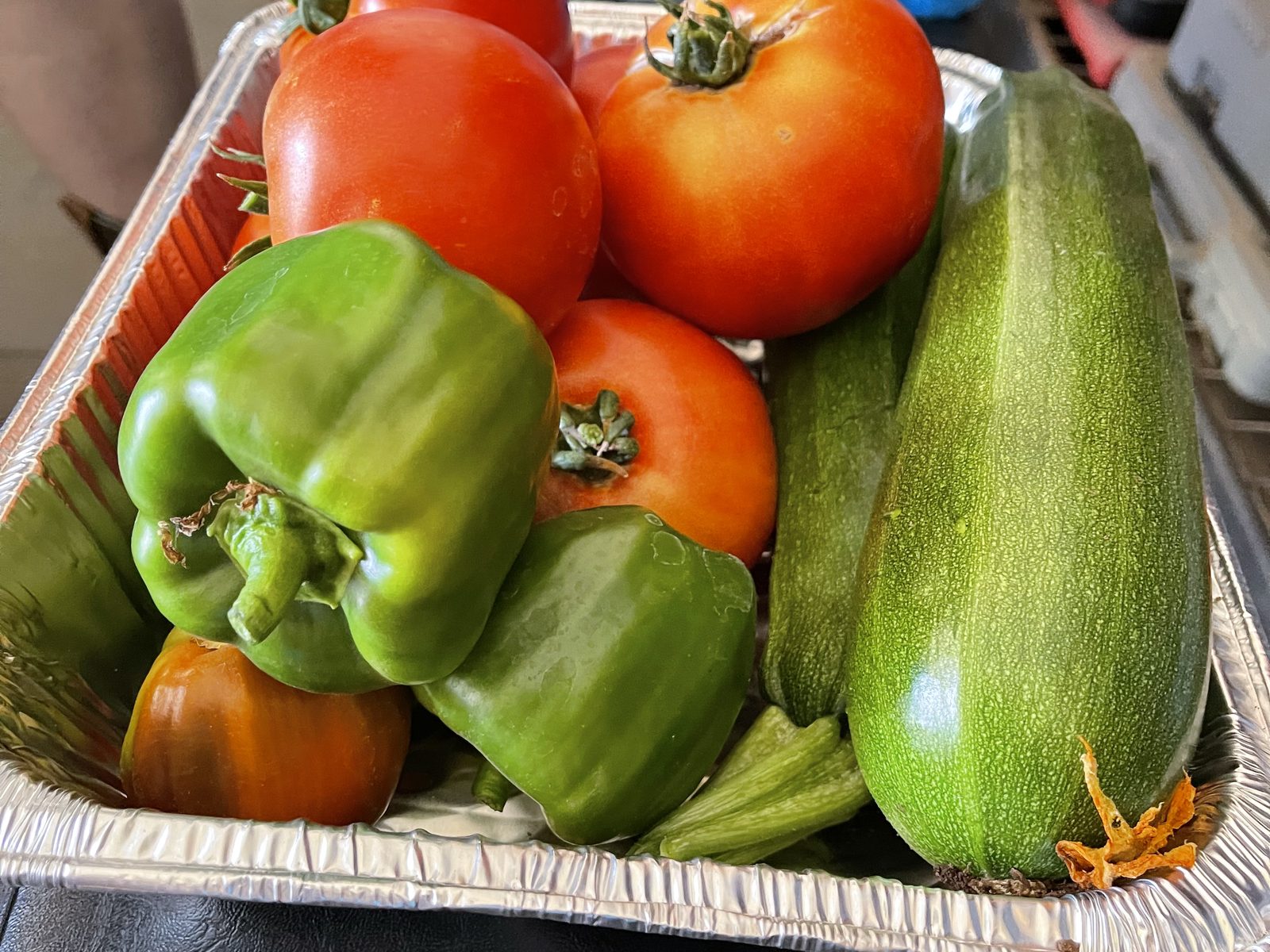
cucumber in the middle. Midsummer is when everything comes in at once.By August the tomatoes are ripening. This tray also holds
bell peppers, zucchini with the blossom still attached, and a few okra
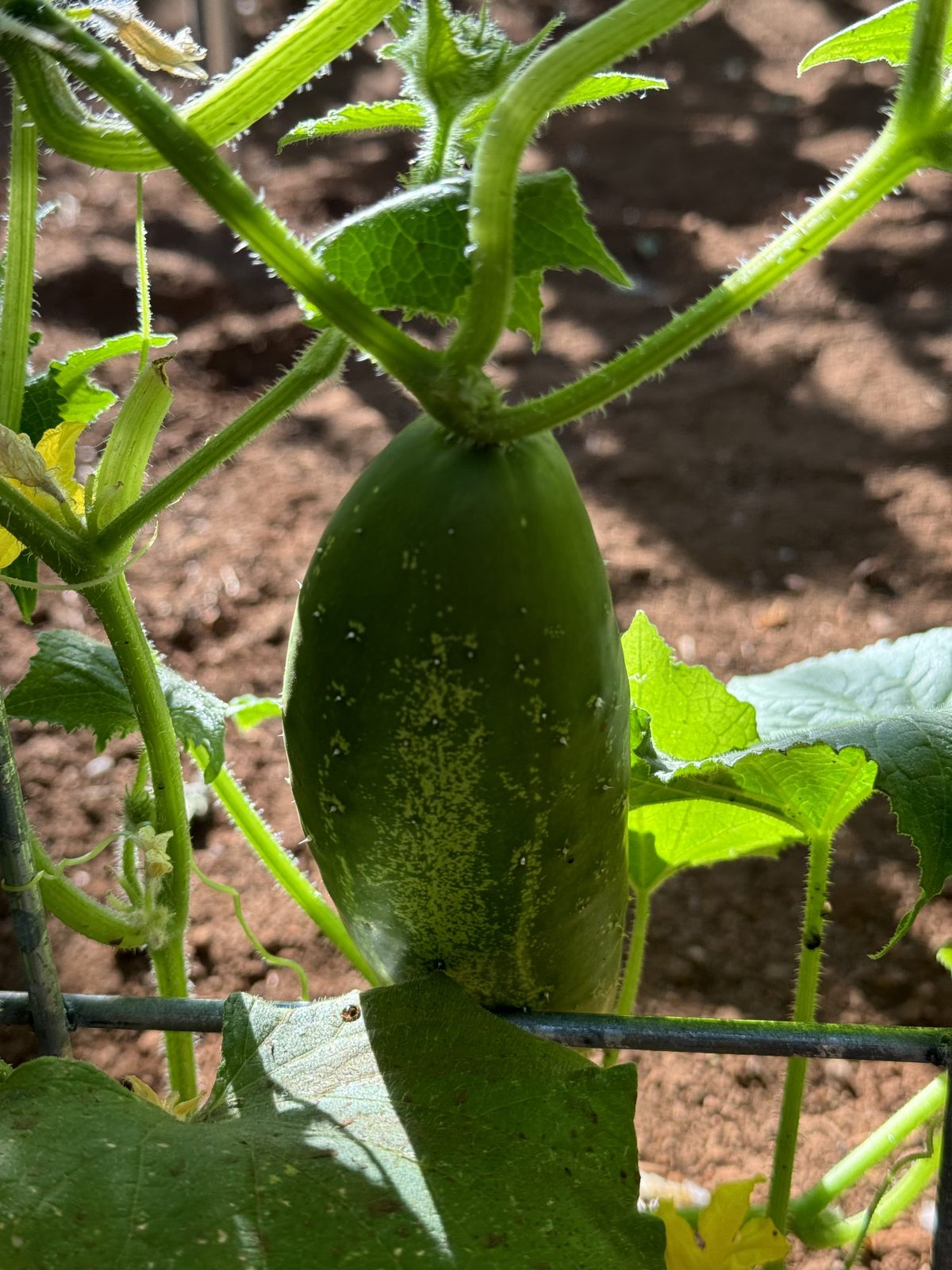
pods tucked in the corner.A cucumber hanging on the cattle panel trellis. Growing
cucumbers up instead of along the ground keeps the fruit clean and
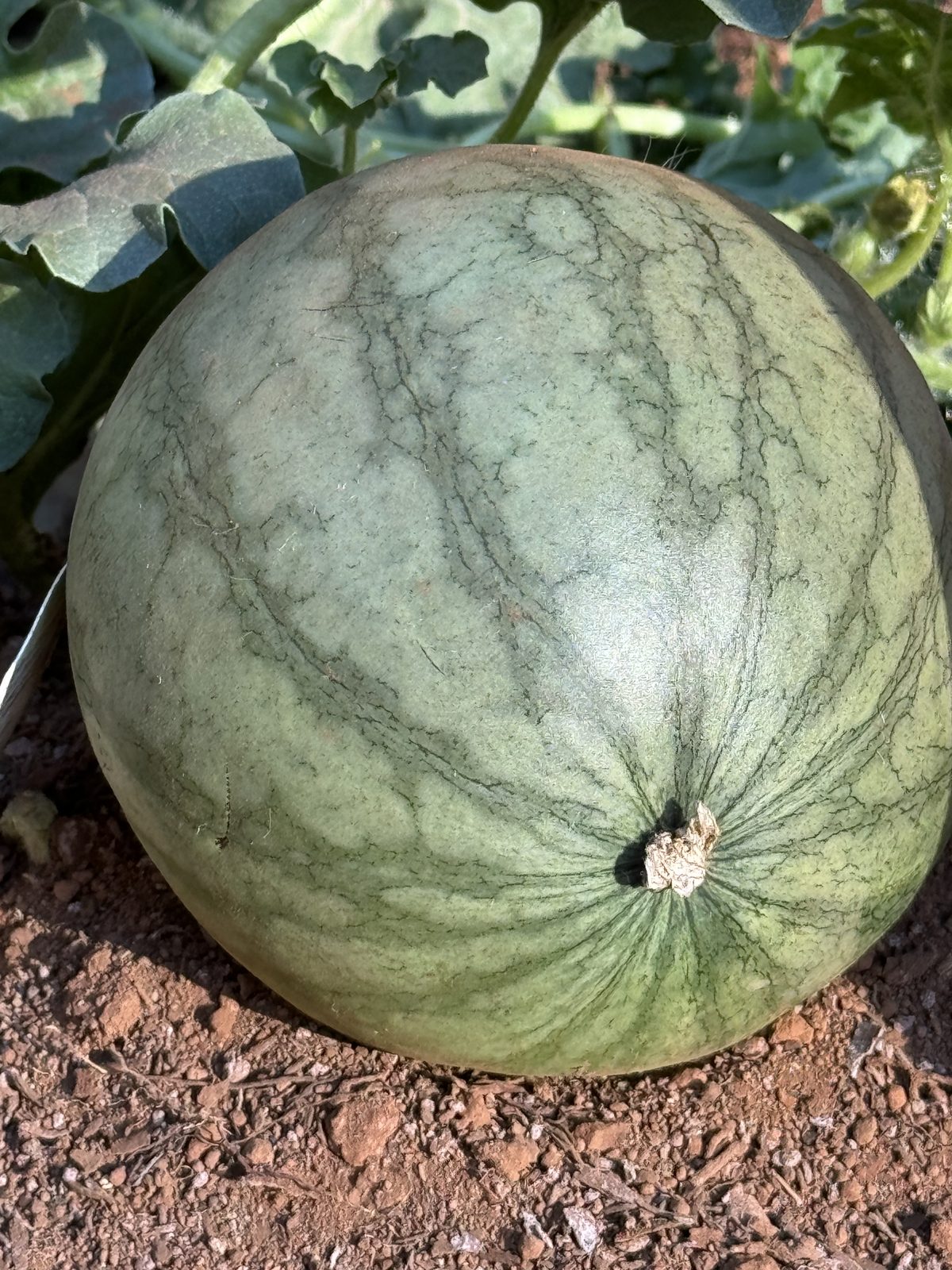
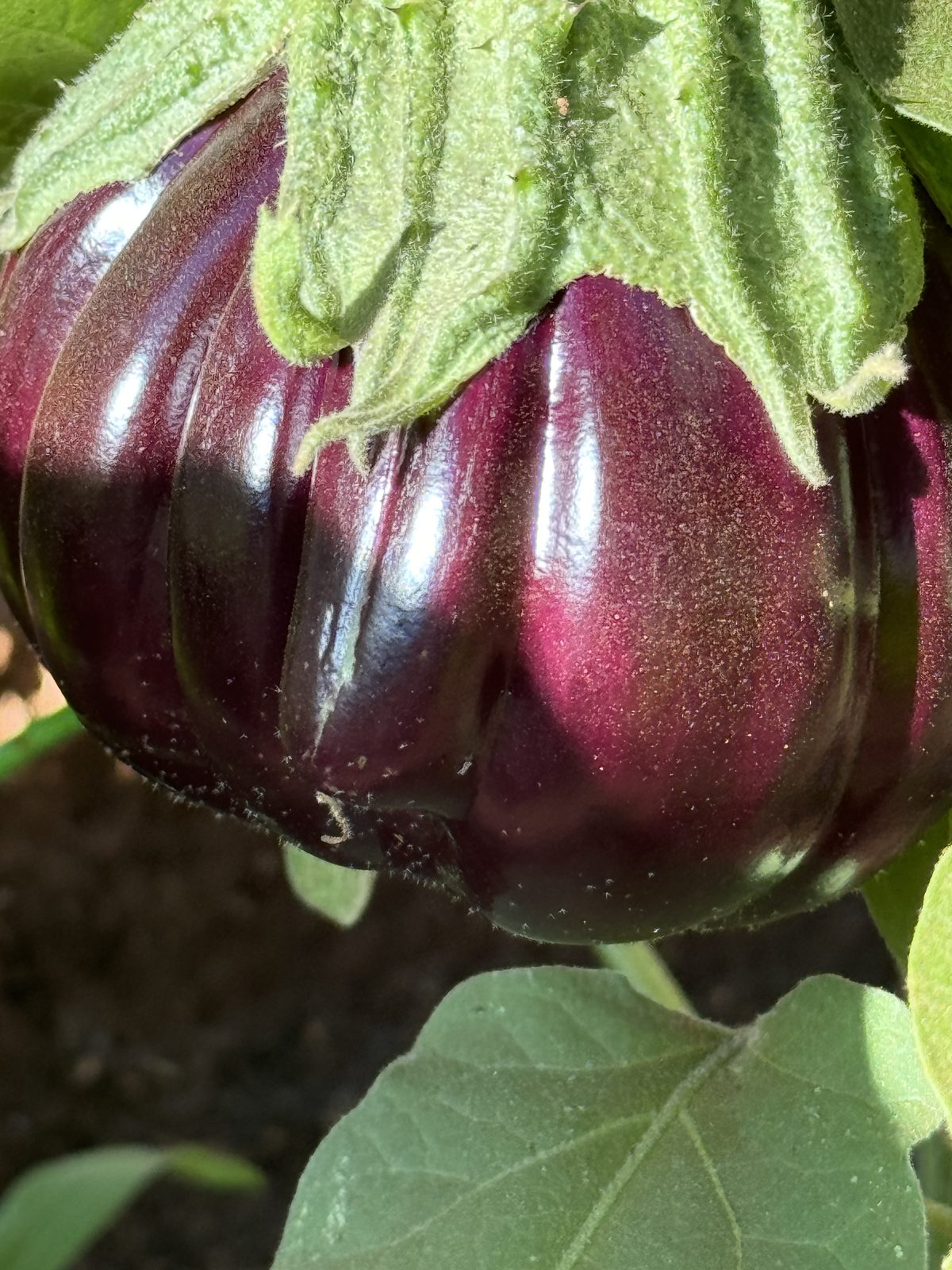
straight, and makes them easy to spot when it's time to pick.A watermelon ripening on our red Sierra soil.A round, ribbed Italian-type eggplant in the morning sun.
The fuzzy green cap is called the calyx. A glossy skin like this is a
sign the eggplant is ready to pick; once it turns dull, the fruit is
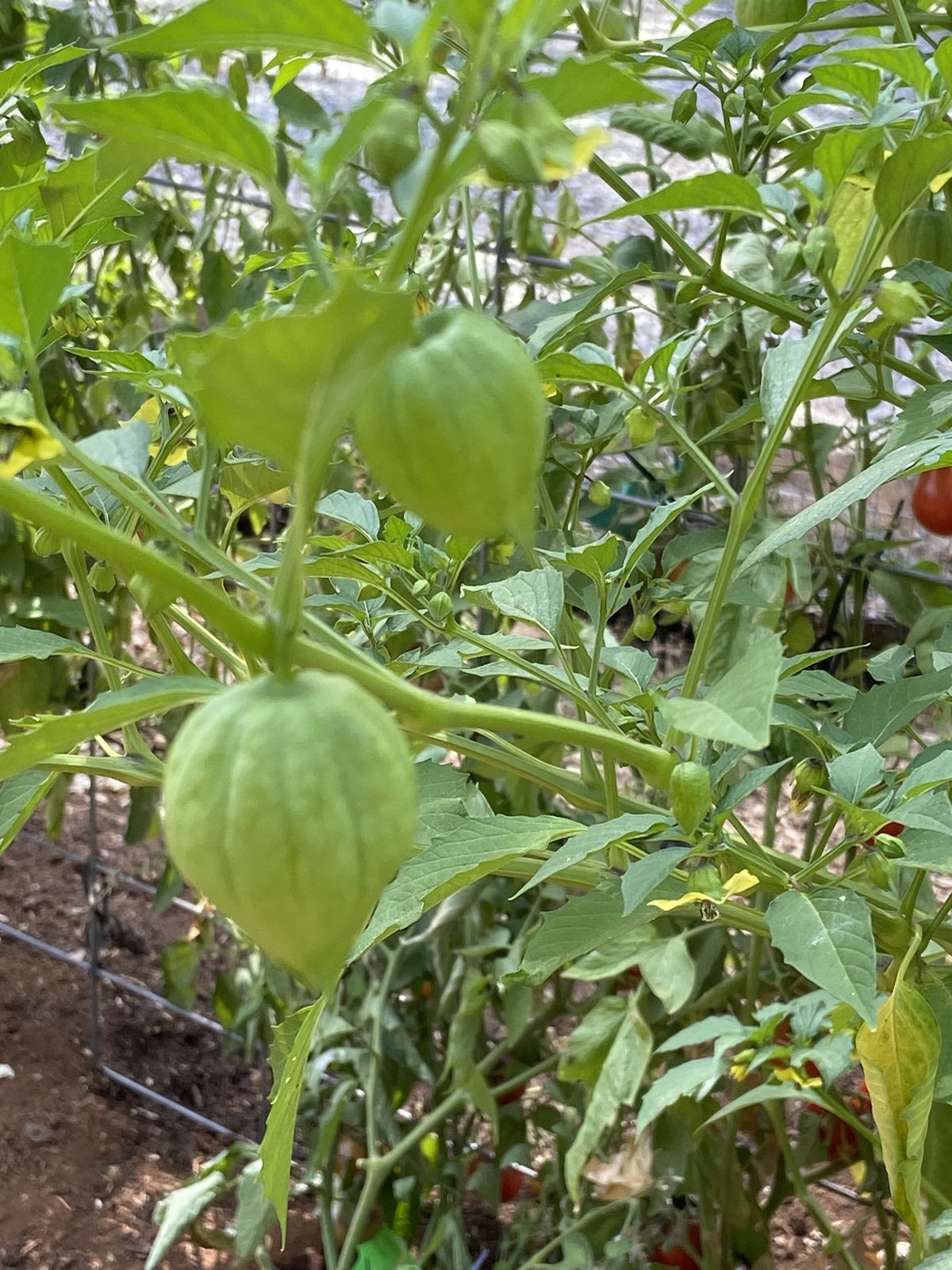
getting overripe and seedy.Tomatillos grow inside papery husks that look like little
lanterns. They are ready to pick when the fruit fills the husk and the
husk begins to split. They are the key ingredient in salsa verde.
What's Living in the Woodpile
We spent the day stacking firewood ahead of the storm that is blowing
through the ridge today. Moving all that wood turned up a surprising number
of residents. Here are a few of the neighbors we found living in our woodpile.
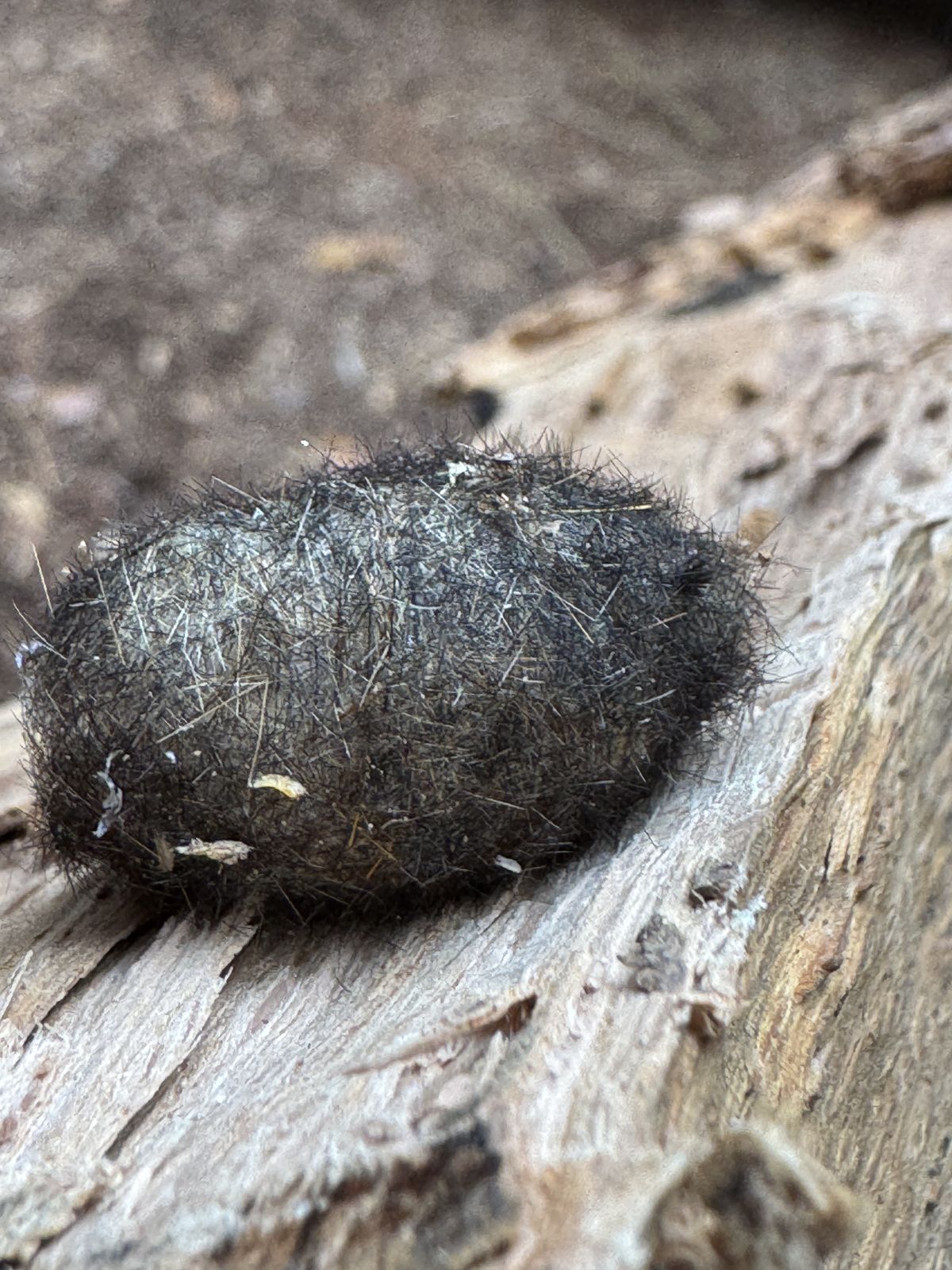
This fuzzy cocoon belongs to a tiger moth, the moth that comes
from the familiar woolly bear caterpillar. The caterpillars weave their own
hairs into the silk. They feed on low-growing weeds like plantain and
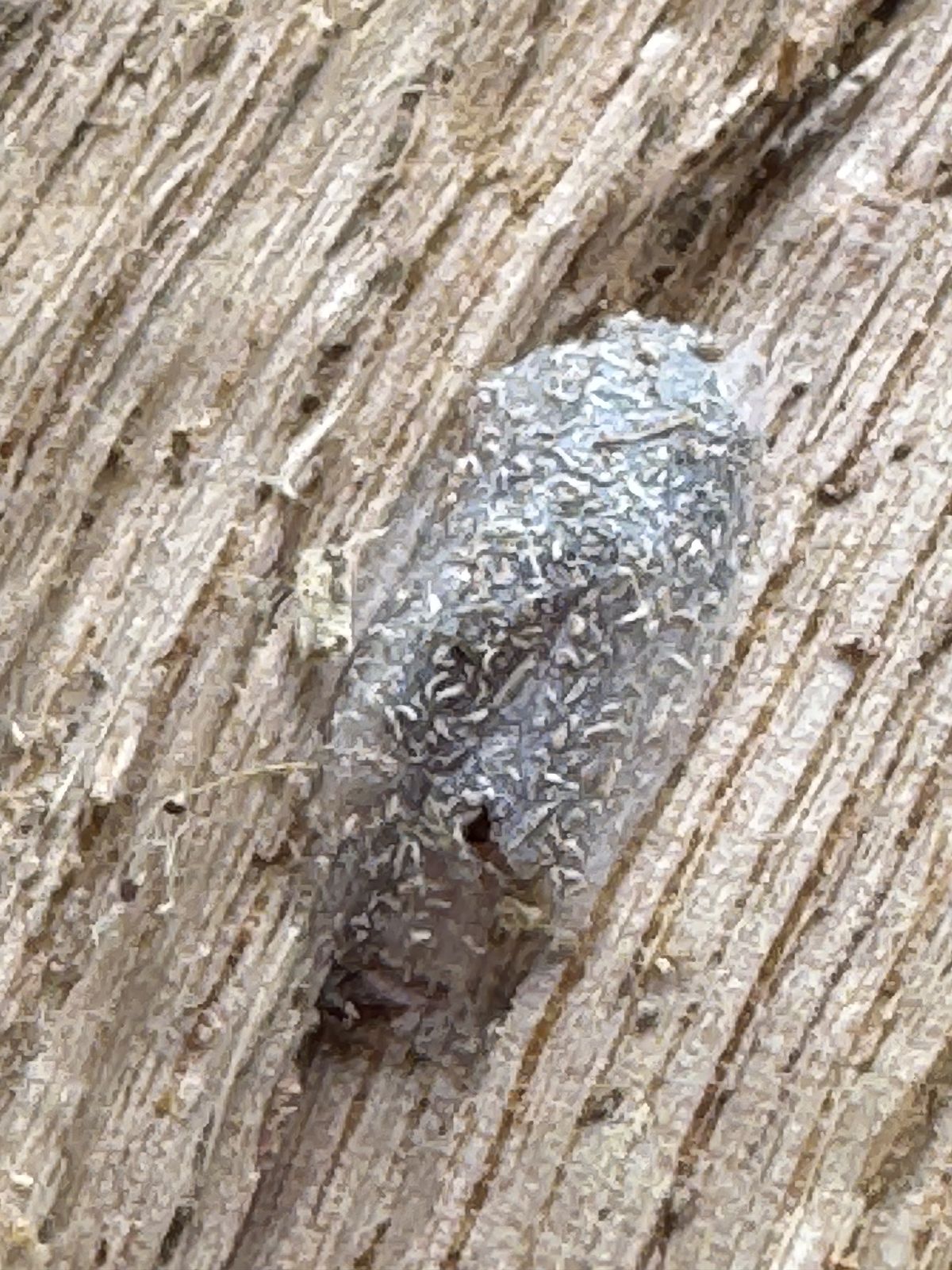
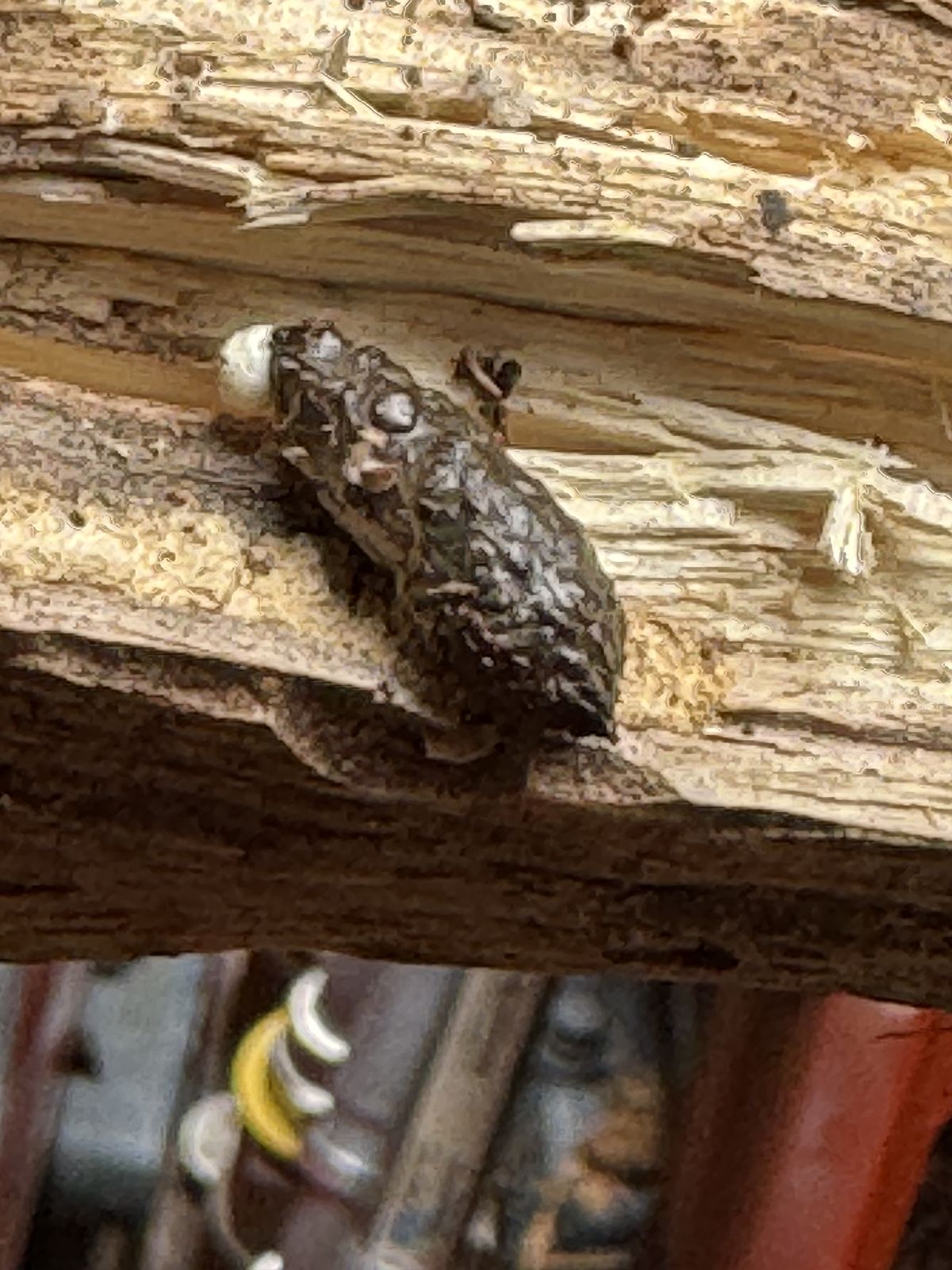
dandelion, so they are harmless, welcome residents.This gray silk cocoon likely belongs to a western tussock moth,
a cousin of the tiger moth. Its caterpillars feed mainly on oak leaves and
rarely do lasting harm, but the white hairs woven into the cocoon can make
skin itch, so this one is best admired without touching.Lizard scat! This was most likely left by a western fence lizard,
the "blue-belly" that suns itself on our woodpile and fences. They are
harmless to people and eat insects and spiders, which makes them good
neighbors. Like all reptiles, they can carry Salmonella, so we wash our
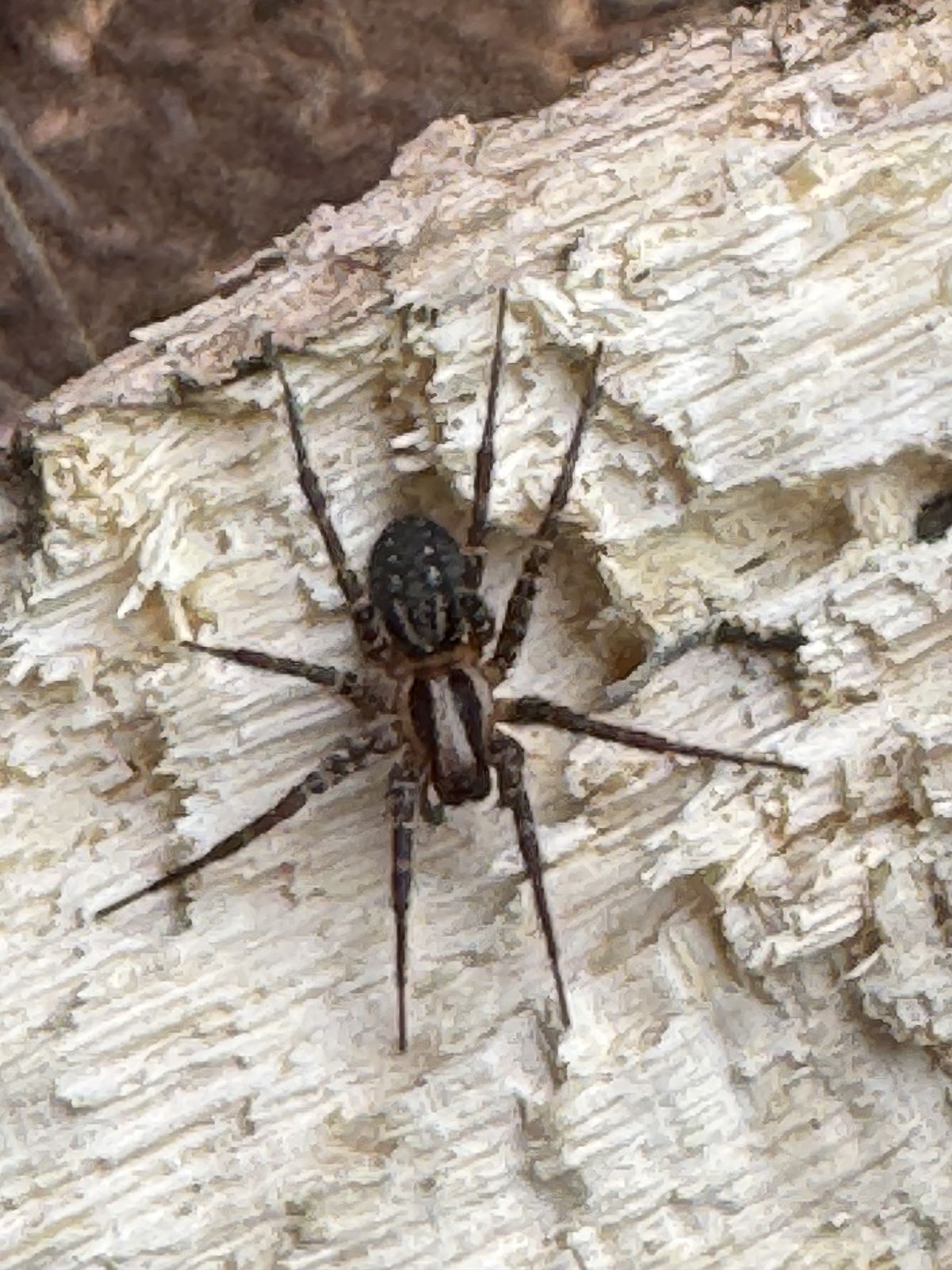
hands after handling the wood.A wolf spider, one of the best hunters in the woodpile. Wolf
spiders don't build webs; they chase down insects on foot. They aren't
dangerous, and a bite from one feels about like a bee sting. We wear gloves
when stacking wood anyway, since black widows like woodpiles too.
A July Morning in the Garden
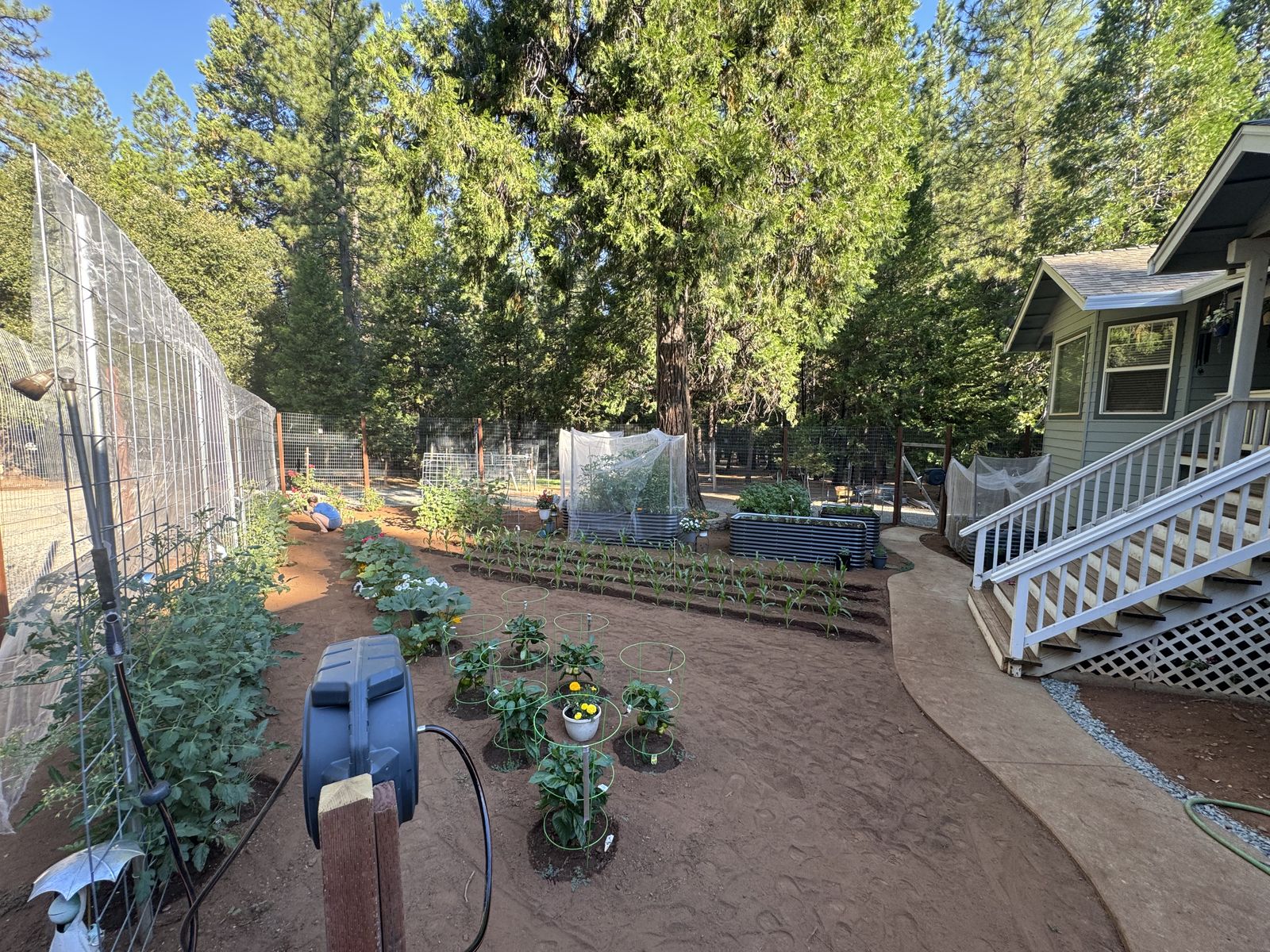
Mornings are the best time to get out into the garden, before the sun
shines directly on the beds and brings on the heat. Here is a walk through
our garden on a July morning, high on the ridge at more than 3,500 feet.
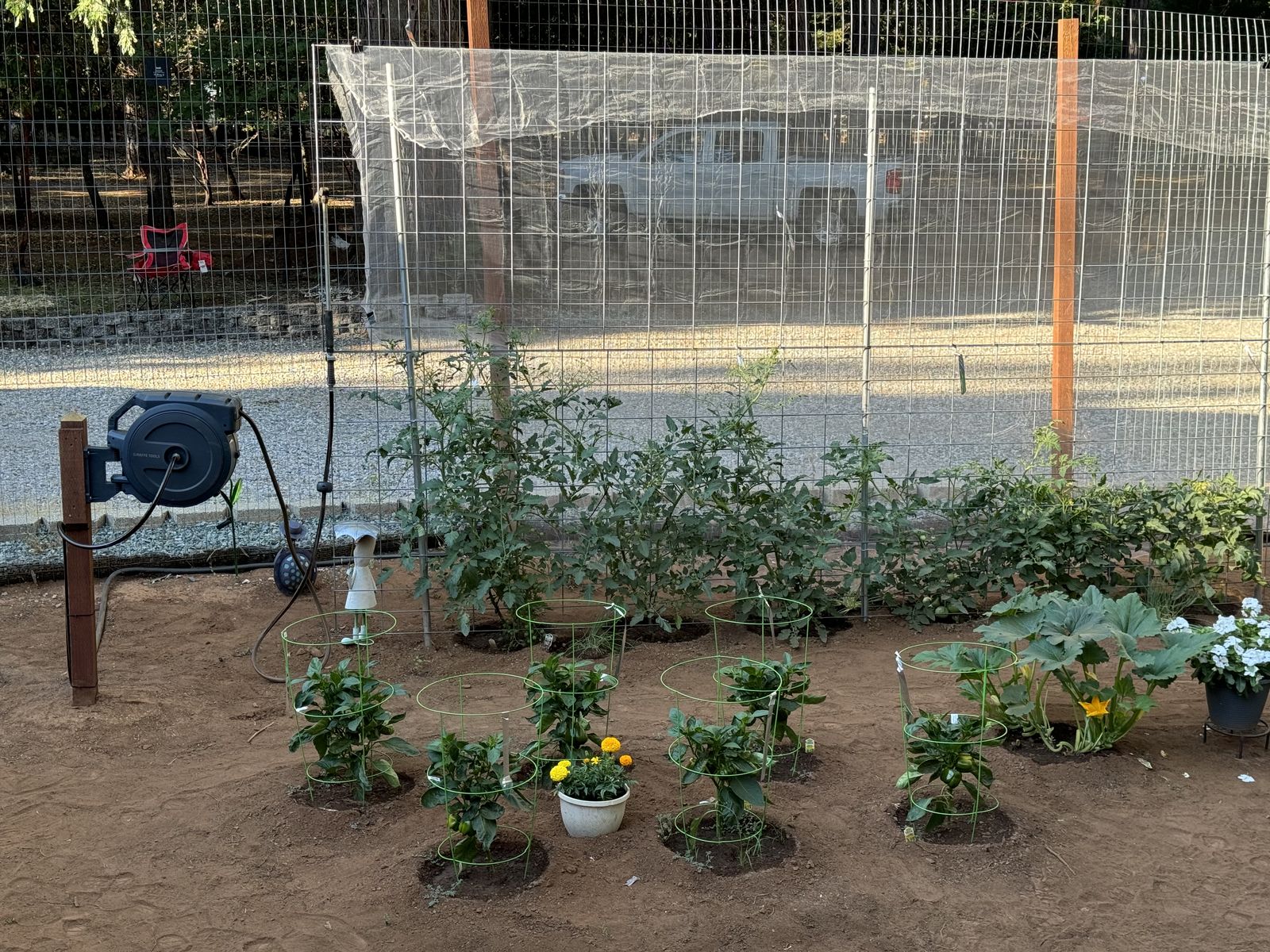
Our 9-foot fence keeps the animals out, especially the deer.
Inside it, vegetables grow in the ground and in Birdies raised beds.Because our growing season is short, we start corn from
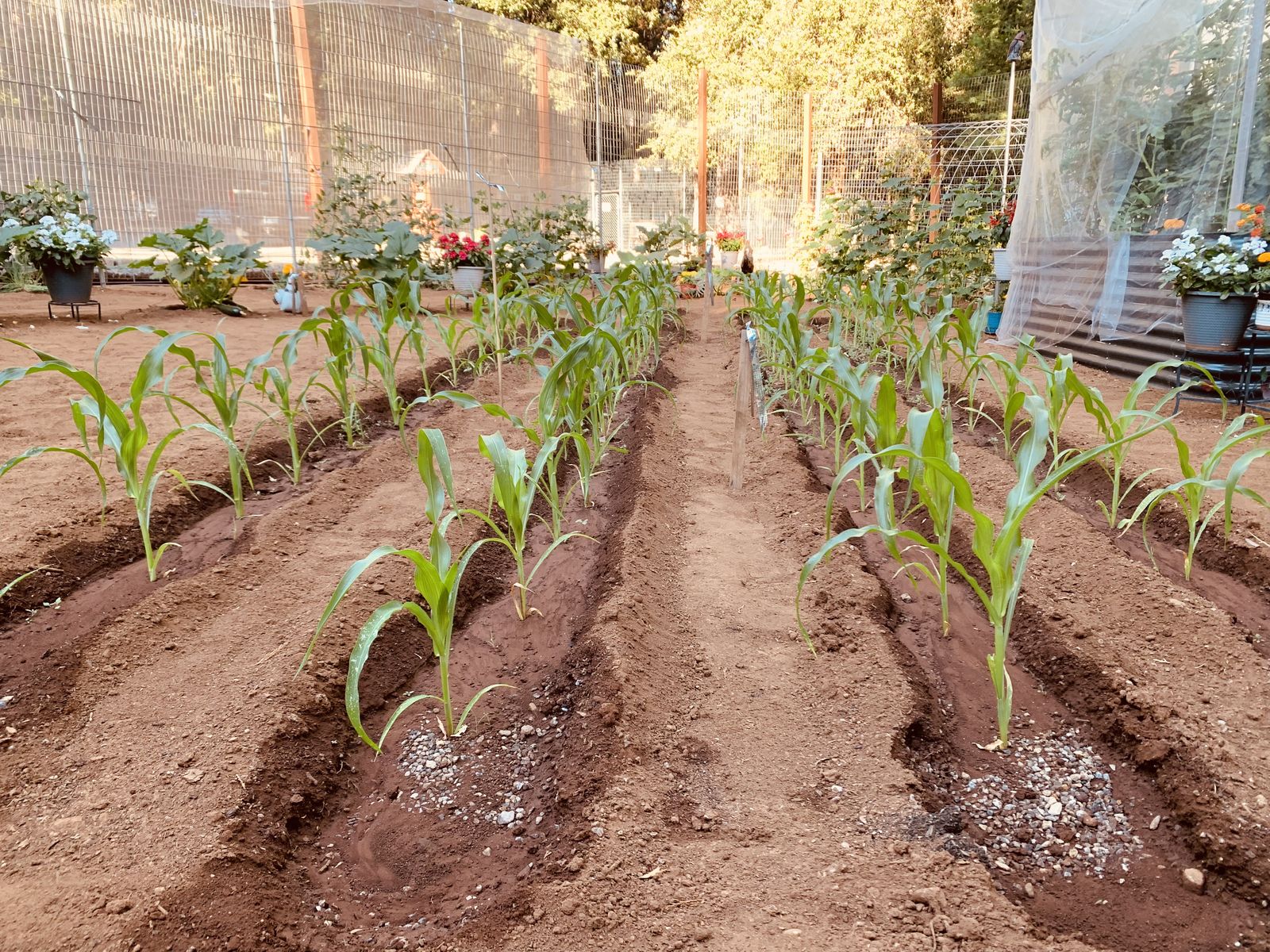
seedlings rather than seed. These came from Bonnie Plants. Neighbors told
us they had never seen anyone grow corn successfully at our altitude. We
had no problems.Ornamental decorations and flowers add beauty to the garden.
Simple, inexpensive cone cages support the peppers, and a retractable
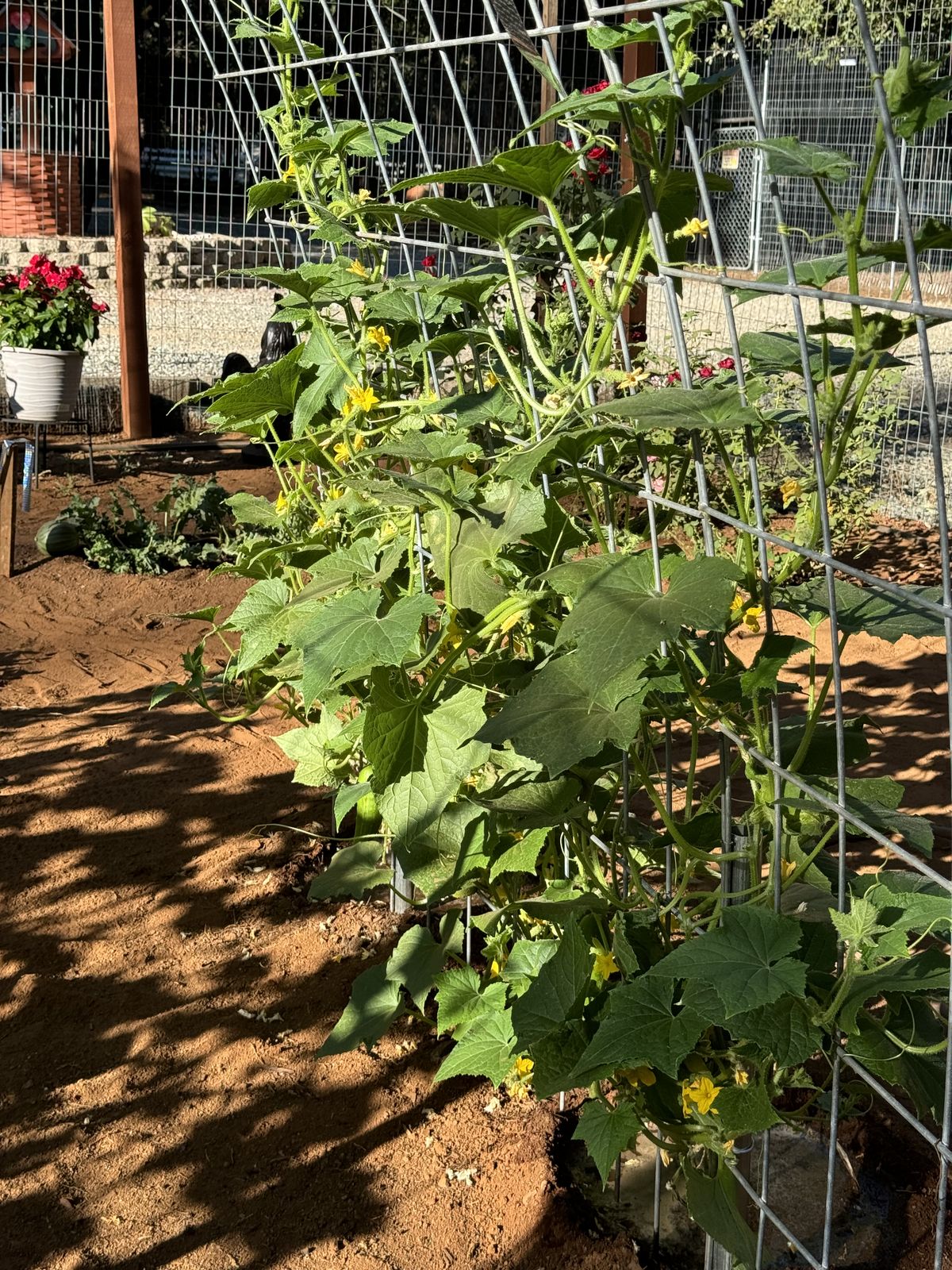
hose reel makes watering much easier.Our cucumbers climb trellises made from cattle panel fencing
from our local Tractor Supply. At our altitude and temperatures, cucumbers
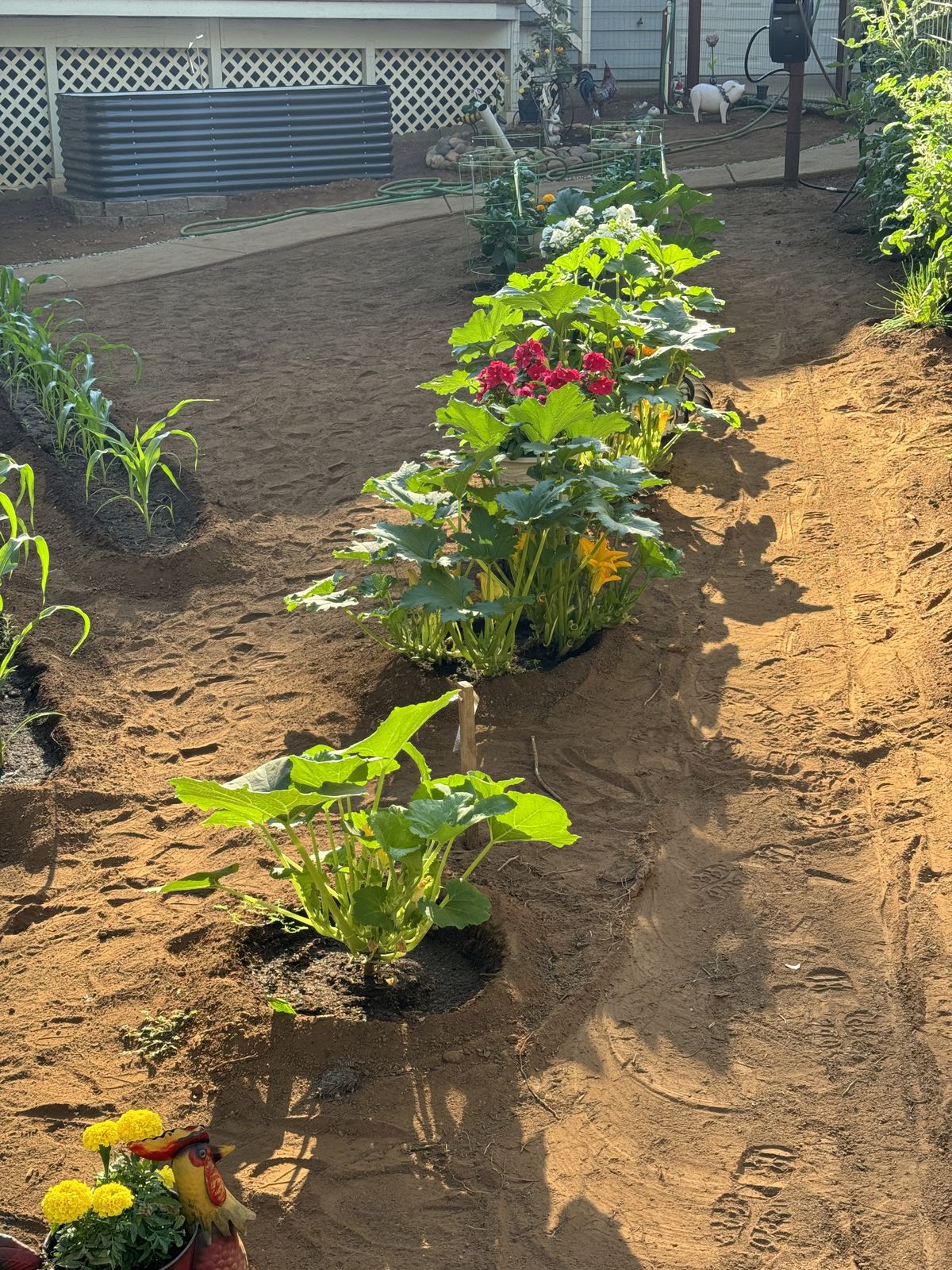
need more water than we expected.We keep the garden free of weeds and the soil well aerated.
A small bowl dug around each plant focuses the water toward the roots.